

5 Small Business Ideas With Low Investment in 2026


You have ₹50,000 in your bank account, and this thought never leaves you: “I want to do something of my own.”
The hard part now begins. So what are you going to do with that money?
Spend it on a shop? Purchase goods and have them on hand for sale? Install it in the equipment? Or keep most of it aside and start with whatever you already have?
You have ₹50,000 to start with, but that doesn't mean you need to spend ₹50,000 right away. Start with the basics, get your first few customers, and build from there. Once you start making sales, you can also look at tools such as GST billing software to keep your invoices and payments in order.
You might begin to order a few tiffins from your home, or begin selling a small range of products online, or a service you already have, or sell a service in your local area. After you determine that people are willing to pay for it, you'll be able to determine if you should invest further into the business.
This is why these small business ideas with low investment are worth considering in 2026. You need not buy everything you want in the beginning; you can control your initial expenses while knowing the business before you're involved in it.
Don't take a suggestion simply because it is a low-cost idea to get started. What's good for business in one location could be different in another. This depends on your abilities, who you can contact, local demand, the time you have, and how much you can afford.
In short, if you are not sure which business to start up when you don't have a lot of capital to invest, these five business ideas will get you started.
5 Small Business Ideas With Low Investment
Let's discuss the choices.
A low start-up cost is not necessarily a good idea. Consider what you can provide, who might benefit from it, and whether you have the time and money to make it work.
Let's explore five low investment business ideas that you can consider:
| Business Idea | What You Can Offer | Why You Can Start Small |
|---|---|---|
| Home-Based Food Business | Tiffin services, homemade snacks, baked goods, or regional food | You can begin from your kitchen and take some limited orders. |
| Reselling or Online Product Business | Pens, items of clothing, accessories, home products, stationery, or niche products | You don't need to purchase lots of stock; you can start with a small selection. |
| Freelance or Skill-Based Service Business | Writing, design, video editing, bookkeeping, social media, or web services | You can begin using the skills and tools that you already have. |
| Local Service Business | Cleaning, tutoring, beauty, repairs, or home maintenance | No need to rent a huge space to serve customers in your area. |
| Handmade or Custom Products Business | Candles, personalized gifts, handicrafts, decoration, or customised stationery | You can produce a few products first or make them when you receive an order from a customer. |
1. Home-Based Food Business

Consider a home-based food business if you like to cook and it is already popular among those around you! You don't need to open a restaurant or rent a commercial kitchen right away. You can begin with a small menu, take a few orders from home, and see how customers respond.
For instance, home-cooked tiffin, breakfast, or homemade snacks, baked goods, and regional specialties can be the beginning. Try to serve a limited number of dishes or products instead of trying to serve everything, but try to serve a small number of customers first to see if you can master them.
One of the things that is great about this setup is that you can expand the number of orders as demand goes up, instead of overloading yourself with orders right from the beginning. Be prepared to take a few orders, know what customers like, and slowly start to make more of these orders.
Before beginning, think about:
- Pick a specific offering: A particular menu is simpler to manage as opposed to a wide one.
- Work out all your costs: Costs not only involve ingredients, packaging, and delivery, but also cover periodic costs such as utilities.
- Test demand with a small customer base: Use friends, neighbours, local offices and community groups to help test demand.
- Repeat orders: Consistency of taste, hygiene and timely delivery can make a big difference!
- Ensure you have the required registrations or licences: Depending on your type of food business and location, you may need to have certain registrations or licences before you start.
A home-based food business can therefore be one of the best small business ideas with low investment for someone who already has the required cooking skills and access to a local customer base. What's important is to begin with small orders and not overspend before you find out what sells.
2. Reselling or Online Product Business

You don't always need to manufacture a product to start selling one. Reselling lets you purchase products from suppliers and sell them to customers at a margin. You can also build a small online store around a specific category instead of trying to compete with large marketplaces on everything.
For example, you could sell clothing, accessories, home décor, stationery, beauty products, or products designed for a particular customer group. Starting with a small, focused product range can help you understand what customers actually want before putting more money into stock.
You can promote your products through social media, messaging platforms, online marketplaces, or your own website. If you already have an audience in your local area or online, that can make it easier to get your first few orders.
A few things to keep in mind:
- Choose your products carefully: Look for products with consistent demand and enough margin to cover your costs.
- Start with limited stock: Avoid putting a large amount of money into products before you know which ones sell.
- Track your inventory: Keep an eye on what is available, what has been sold, and which products need to be reordered. Proper inventory management becomes increasingly important as your number of products and orders grows.
- Keep shipping requirements in mind: If your business involves transporting goods, you may also need to manage E-Way Bills. Using E-Way Bill software can make the process easier when you have regular shipments to handle.
- Work out the complete cost: Consider supplier prices, packaging, delivery, platform fees, returns, and other expenses before setting your selling price.
- Build trust online: Clear product information, good-quality images, transparent pricing and responsive customer service can encourage people to buy from you.
This can be a practical option among small-scale business ideas with low investment, particularly if you can identify a specific product category and reach the right customers without spending heavily on a physical store.
3. Freelance or Skill-Based Service Business

Sometimes, your most valuable business asset is a skill you already have. If you can write, design, edit videos, manage social media, build websites, handle bookkeeping, or provide another professional service, you can turn that skill into a small business without investing heavily in equipment or inventory.
For example, a person who is good at graphic design could create social media creatives for local businesses. Someone who is good at writing can take on website or blog projects, while someone with bookkeeping experience can help small businesses keep their accounts and records in order.
One of the good things about this type of business is that you can begin with a few clients and take on more work as you get comfortable. You can also work from home, so there is no need to take on office expenses at the beginning.
To get started, concentrate on:
- Selecting a service to be clear: pick 1 or 2 services you know you can do well and not try to do everything.
- Making a simple portfolio: Gather some samples of your work for potential clients to check out before hiring you.
- Finding your first clients: Reach out to your existing network, local businesses, professional communities and relevant online platforms.
- Setting clear prices: Consider the time, effort and value involved in each project rather than choosing a price simply because it is low.
- Keeping business records organised: As you start getting more projects, keeping your invoices, payments and financial records in order becomes important. GST accounting software can make these tasks easier to manage as your workload increases.
For someone who already has a useful skill, freelance work can be a practical new business idea with low investment. You can start with a few clients, work from home, and take on more projects as your client base grows.
4. Local Service Business

Not every business has to be run from a laptop. Look around your own area, and you'll find plenty of services that people need regularly. For those who have the skills, a local service company might be a good place to start with a modest set-up and slowly increase the number of customers one by one.
Depending on your skills and the needs of your area, you could offer services such as home cleaning, tutoring, beauty services, appliance repair, gardening, car cleaning, or basic home maintenance. It is best to begin serving customers in a limited selection of locations and then increase as you book more.
For instance, a person who has a specified background in beauty services might begin by scheduling appointments in the house or providing house visits. Similarly, a person who is good at a particular school subject could begin with a few tutoring students and gradually add more.
Before you begin, there are a few points to keep in mind:
- Find a need in the community: Consider the services that are needed on a regular basis but may be hard for people to get.
- Begin with services that can be performed well: More services as customer needs are determined.
- Keep your initial costs under control: Buy only the equipment and supplies you actually need to begin.
- Build a local reputation: Recommendations and repeat customers can become an important source of business.
- Make booking and payments simple: Clear pricing, professional communication and proper invoices can make the experience easier for both you and your customers.
The more customers who come and go, the more critical it is to manage appointments, payments and invoices. From the start, having an organised system can make it easier to run the business as it grows.
If you have a useful skill and understand your local market, this can be one of the best small business ideas with low investment. You can get started without taking on the cost of a large commercial setup.
5. Handmade or Custom Products Business

If you love to make things by yourself or produce custom products, you can use that talent to start a small business without needing a great deal of stock. Handmade and custom products may be especially attractive as customers are usually looking for something more personal than an off-the-shelf product.
You could make candles, personalised gifts, handmade jewellery, home décor, customised stationery, gift hampers, or other niche products. Instead of producing large quantities in advance, you can start with a small collection or make products after receiving an order.
For example, if you create personalized gift hampers, you could offer a few fixed options and allow customers to customize the contents for birthdays, anniversaries, or other occasions. This approach can help you test demand without spending heavily on stock.
To get started, consider:
- Choose a specific product category: A clear niche can make it easier for customers to understand what you offer.
- Start with small batches: Produce only enough to test which products receive the most interest.
- Calculate your actual costs: Include raw materials, packaging, delivery, labour, and any platform or marketing costs.
- Show your products well: Good photographs and clear descriptions can make a significant difference when selling online.
- Use social media to reach customers: Platforms such as Instagram and Facebook can help showcase your work and attract local as well as online buyers.
- Keep track of orders and stock: As sales increase, organised records can help you avoid missed orders, stock shortages and pricing mistakes.
The made-to-order model can make this one of the more practical low-investment business ideas, particularly when you already have the skills to create the products and can build demand gradually.
The key is not to spend heavily on materials or packaging before you know what customers want. Start with a manageable range, learn from early orders, and reinvest in the products that perform well.
How to Choose the Right Low-Investment Business Idea?
Having several business options is useful, but the lowest-cost idea isn't necessarily the right one for you. A business that matches your skills, resources, and customer demand is more likely to be easier to manage and grow.
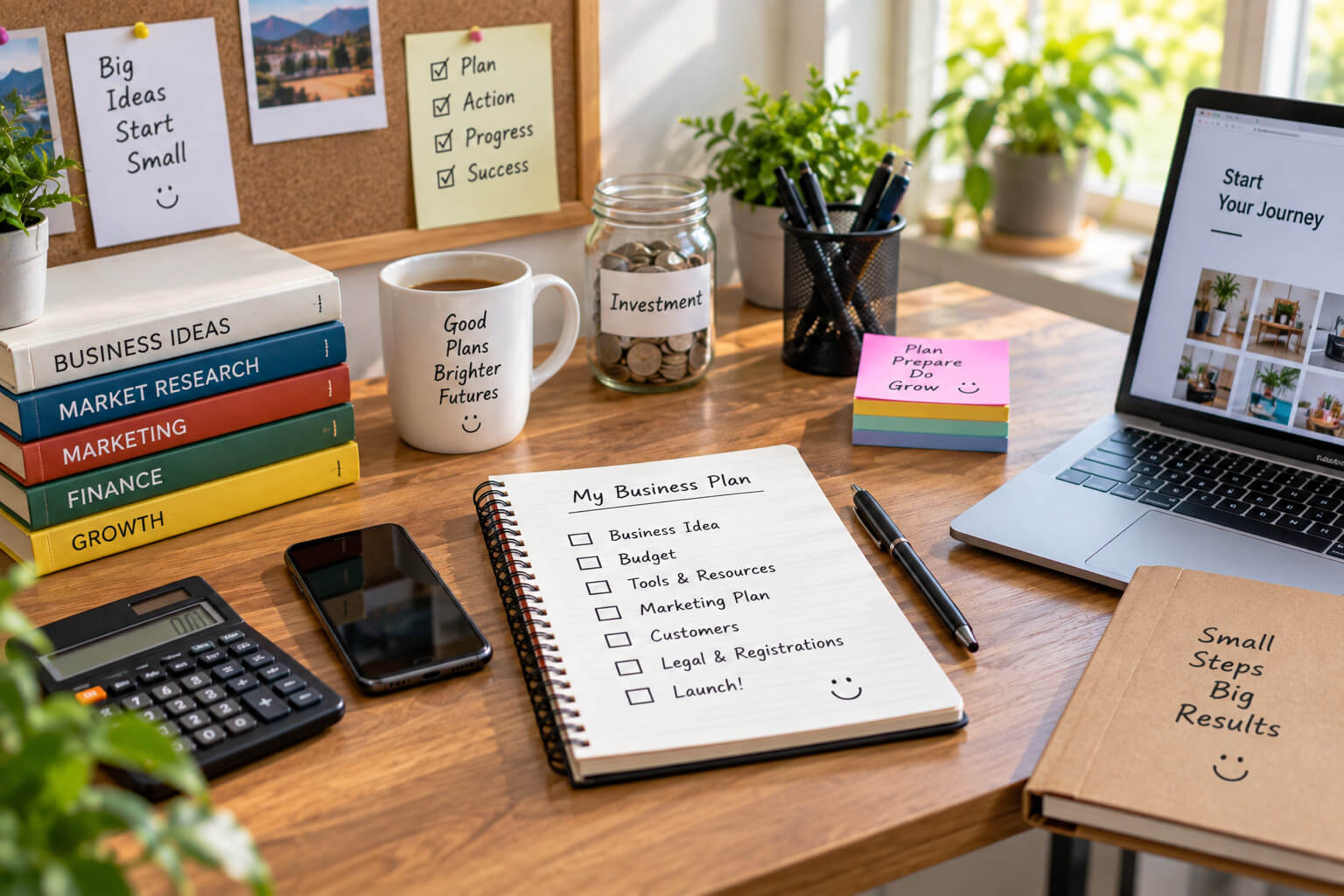
Before choosing an idea, consider these factors:
| What to Consider | Questions to Ask Yourself |
|---|---|
| Starting Budget | How much can I comfortably invest without putting essential savings at risk? |
| Skills and Experience | What can I already do well, and what would I need to learn? |
| Customer Demand | Are people willing to pay for this product or service? |
| Location | Does my local area have enough potential customers, or will I need to sell online? |
| Time Available | Can I manage the business full-time, or will I run it alongside another job or responsibility? |
| Operating Costs | What will I spend regularly on materials, stock, delivery, tools, marketing, and other expenses? |
| Growth Potential | Can I gradually increase customers, products, or services without making the business too expensive to run? |
A simple way to narrow down your options is to start with what you already have. Your existing skills, contacts, equipment or understanding of a particular market can reduce the cost and effort needed to get started.
It is also worth testing your idea before making a large investment. Start with a small number of customers, take limited orders, or offer your service to a specific audience. Their feedback can tell you what works, what needs improvement, and whether there is enough demand to continue.
Once you've decided which business you want to start, you'll need to think about the practical side of running it too. That includes registrations, banking, billing and keeping your day-to-day work organised. If you're considering billing software, you can schedule a GST billing software demo with Go GST Bill to see how it can fit into your business before you get started.
What You'll Need to Start Your New Business?
Choosing a business idea is only the first step. Once you decide what you want to offer, you also need to set up a few basics so you can operate the business smoothly and build trust with your customers.
The exact requirements will vary depending on your business type, location, and how you operate, but these are some of the key things to consider before you start accepting regular orders or clients.
1. Business Registration
You may have to register your business with the relevant authorities if your business is a certain structure and you are going to do your business in a specific way. Being registered may also help you to formalise your business when dealing with your clients, suppliers or other businesses.
When registering, be aware of which structure you should use, and any continuing compliance needs you might have. Don't necessarily have the same registrations as other businesses, and requirements to be checked depending on the nature of your work.
2. Required Certificates & Registrations
Depending on the products and/or services supplied, some businesses need other licences, certificates or registrations.
For instance, a food business could have specific food-related requirements; other businesses could require registrations for activity, turnover or location. GST registration could also be applicable, depending on the conditions.
The key is to find out what registrations are required for your business before you start up, and not assume that all small businesses require the same types of registrations.
3. A Billing & Business Management App
When you begin to make sales, send invoices, receive payments, and deal with other tasks, it can easily get complicated to manage things manually. Even a small business can have multiple customers, pending payments, expenses, and invoices to keep track of.
With the help of a billing and business management app, you can make these everyday tasks organized.
For example, you may need to:
- Create and share professional invoices.
- Use the right GST invoice format when applicable.
- Keep track of sales and payments.
- Maintain customer records.
- Monitor inventory if you sell products.
- Keep business information organised in one place.
- Reduce the chances of missing or losing important billing records.
This is where a tool such as Go GST Bill can be useful for a new business. Instead of waiting until your business becomes complicated, you can start with an organised billing process from your first sale. If you want to see how it works for your business, you can sign up for Go GST Bill and get started with your billing and business records.
4. Business Bank Account
It can be easier to manage money when your business and personal affairs are kept separate. Having a business bank account will make it easier to see customer payments, business costs, etc.
It will also make it easier to manage your finances as your business expands. The kind of account and needs will rely on the type of business structure and banking institution.
5. Social Media Accounts
Social media can be one of the easiest methods for many small businesses to reach potential customers with their products or services.
The platforms you use are Instagram, Facebook, or LinkedIn – where your target customers are hanging out. Your profile can be used to highlight your products, describe your services, share your customers' experiences, and give a convenient way for your customers to contact you.
No need to be active on all platforms from the outset. Begin with one or two platforms that seem relevant to your audience, maintain the information, and concentrate on posting relevant, useful information on a regular basis.
Once you have these basics, you are ready to take your business idea and turn it into a viable business which will serve your customers and expand over time.
Conclusion
Having a limited budget doesn't require that you think small in starting your business. Getting the right idea is important; it should match your expertise, budget, and have market demand.
You can begin your business small, in whatever kind you choose: a home-based food business, reselling products, offering a skill-based service, selling a local service, or handmade products, etc., to test the market without undue financial risk. As more customers and knowledge of what works come in, you can invest more in your business.
Don't forget about the core principles that help keep a business organised at the same time. From the start, having the right registrations, a business bank account, social media, and a good billing system will make everyday operations a breeze.
Go GST Bill can assist you in managing your business from a single place for everyday requirements like billing, invoicing, payment tracking, etc. It is better to have an organized billing process so that you can begin to make proper records when your business is not busy.
The best business idea isn't necessarily the one that requires the least money. It's the one you can start realistically, manage consistently, and grow sustainably.
Frequently Asked Questions
1. What are the best small business ideas with low investment?
2. Which business can I start with a small budget?
3. Can I start a business from home with low investment?
4. What registrations are required to start a small business in India?
5. Do I need billing software for a small business?
6. How can I manage invoices and payments as my business grows?



